
Light-It Up
CrazyLabs LTDArcade
4.613.40K Reviews
- Version
- 1.9.5.6
- Installs
- 50.00M
- Age Rating
- Everyone
Screenshots
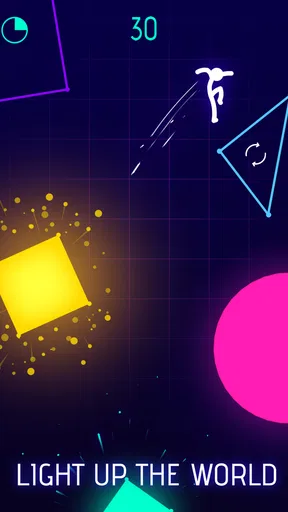
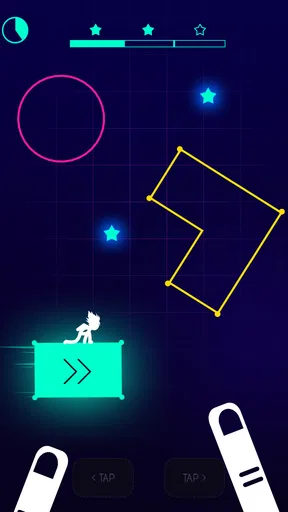

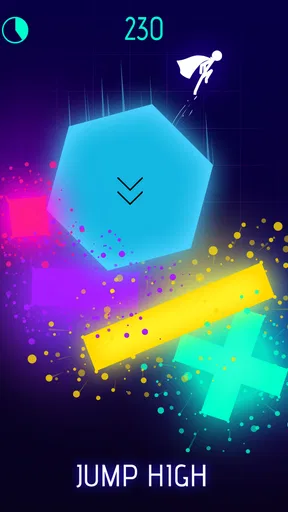
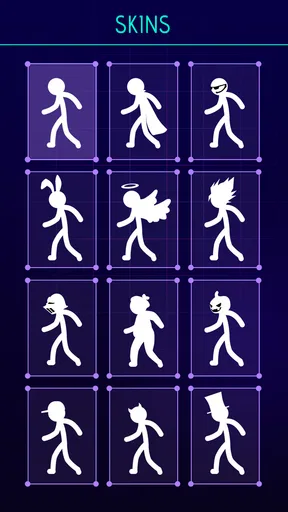
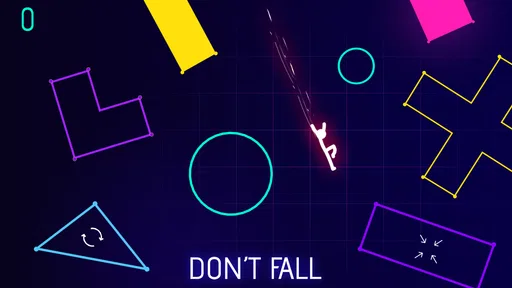
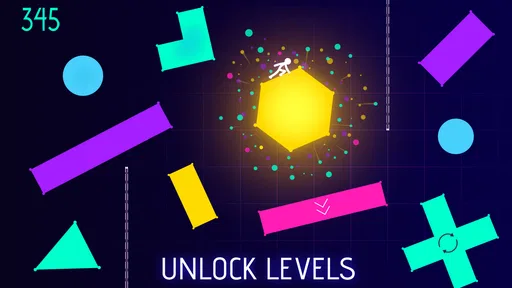

Our Review of Light-It Up
 Analysis by Appyee
Light-It Up is the kind of arcade game I reach for when I want a quick challenge rather than a long story or a complicated control scheme. I jump a stickman through dark geometric stages, touch bright shapes to light them up, and try to keep moving without falling. The idea is easy to understand within seconds, but the timing becomes much less forgiving once the level layout starts demanding a planned route instead of random leaps.
That simple loop is the main reason it works. I do not need to remember a plot, manage equipment, or learn a large control system before playing. I can open it for a short break, make a few attempts, and put it down. At the same time, the game has enough room for repeated retries because success depends on reading the next jump, controlling momentum, and deciding when to commit. It is a focused arcade experience, not a broad platform adventure.
How the first goals make the game easy to understand
The opening stages give me a clear objective: jump, flip, and activate the shapes in the level. The bright objects provide immediate visual feedback, so I can tell which parts of the route still need attention. That is more useful than a long tutorial because the game teaches through movement. I learn the rhythm by playing, not by reading instructions.
My first goal is usually just reaching the end without falling. Soon after, I start caring about whether I can light the route more cleanly and avoid wasteful movements. This creates two layers of motivation. A beginner can focus on survival, while a more confident player can replay a stage to improve execution. The distinction matters because the game does not need to become complicated in order to give me a reason to try again.
The stickman’s movement also makes each attempt feel active. A jump is not merely a button press that sends the character automatically toward safety. I need to judge the distance, the angle, and the moment to move again. Flips add personality to the action, but they also make the character’s trajectory something I have to watch carefully. When I miss, the mistake usually feels connected to my timing rather than completely random.
One useful habit is to stop treating every glowing shape as an invitation to leap immediately. I get better results when I first look at the next two or three platforms and imagine where the character will land after the current jump. That small pause helps me distinguish a safe route from a tempting but awkward one. The game rewards anticipation more than frantic tapping.
For an everyday example, I can play it while waiting for a coffee or during a short commute break. A single failed attempt does not require a major time commitment, and a successful run gives me a satisfying stopping point. It is less suitable when I want a calm game, though. Even a brief session can become surprisingly intense when a level forces several accurate jumps in succession.
What progress feels like during ordinary play
Progress in Light-It Up is communicated mainly through the stages themselves and through my growing ability to read them. The most satisfying signal is not a new character build or a long menu of statistics; it is recognizing that a jump that once seemed impossible is now manageable. I can feel the improvement in my hands because I begin to correct my position earlier and react less desperately.
The visual contrast between the dark background and the bright shapes helps me understand what I have done. A route gradually becoming illuminated gives the attempt a visible sense of completion. That is a smart fit for an arcade game: the world communicates progress without interrupting the action with heavy menus or explanations.
I also notice a difference between learning a level and mastering it. During the first attempts, I am discovering the order of jumps and the amount of space available. Later, I am trying to make the same route smoother. That second phase is where the game’s replay value becomes clearer. I am no longer asking, “What happens next?” I am asking, “Can I execute what I already know without making one careless correction?”
Players who need a large collection of unlockable abilities may find this approach too lean. The appeal is in movement and repetition, not in building a powerful character. That is not a flaw for me, because it keeps the challenge readable. It does mean that anyone expecting the layered progression of a role-playing game or the equipment chase of a larger platformer should choose something else.
The developer, CrazyLabs LTD, keeps the presentation direct enough that the central action remains easy to follow. The game belongs firmly in the arcade category, and that classification is helpful: it is built around short attempts, immediate feedback, and improvement through practice. I would not install it expecting a deep narrative campaign or a large social world.
How the difficulty curve changes the way I play
The early challenge is approachable because the objective is so clear. I can understand the basic jump pattern quickly, and the bright platforms make the next target visible. The difficulty rises when the route leaves less room for correction. At that point, simply moving forward is not enough; I have to commit to a jump while already preparing for the landing that follows.
This creates a familiar arcade tension. A stage may look simple when I view it as a still arrangement of shapes, yet feel demanding once the stickman is in motion. The challenge comes from translating a visual plan into a sequence of timed actions. I often fail not because I misunderstood the goal, but because I started the next movement a fraction too early or too late.
My best advice is to use failed attempts as reconnaissance rather than immediately repeating the same behavior. If I fall at the same point twice, I change one thing: I approach from a different angle, wait longer, or aim for a different part of the platform. Repeating an identical mistake only makes the game feel harsher. Small adjustments turn retries into useful practice.
Another practical tip is to avoid playing with a rushed mindset. The short format makes it tempting to tap quickly, especially after a mistake, but rushed inputs usually create a second mistake. I get more consistent results when I watch the character’s position and make deliberate decisions. The game is fast enough to feel energetic, yet it rewards a calm reading of the layout.
There is also a trade-off in the way the challenge is presented. Because the core controls are easy to grasp, advanced difficulty can feel sharp when the stage demands several accurate actions together. Players who enjoy trial and error will probably appreciate that pressure. Players who prefer forgiving checkpoints, generous recovery options, or a relaxed platforming pace may become frustrated.
That difference determines whether the game is a good fit. I recommend it to someone who likes compact arcade challenges and does not mind repeating a section until the movement feels natural. I would steer a player toward a gentler platform game if they mainly want exploration, discovery, or a sense of uninterrupted forward progress.
Why the game keeps pulling me back
The retention comes from a straightforward question: can I do better on the next attempt? A failed jump is close enough to success that I usually understand what went wrong. That makes another try feel justified. The game does not need a complicated reward structure when the movement itself supplies the feedback.
There is a useful tension between completion and performance. Reaching the end of a stage can be enough for a casual session, but the route may still invite refinement. I might replay because I want a cleaner sequence, a more confident landing, or simply proof that the previous success was not luck. This kind of replay value is strongest for people who enjoy polishing their technique.
At the same time, the game can place pressure on my patience. Repetition is part of the design, and not every retry feels equally meaningful. When I am tired, the same precision that feels satisfying in a focused session can feel demanding. I also have to accept that the game’s appeal is narrow: if the jumping itself does not hold my attention, there is not a separate story or management layer waiting to rescue the experience.
Light-It Up is free to play, with optional in-app purchases ranging from $0.99 to $19.99 per item. That makes it easy to try without paying upfront, but I still prefer to approach the purchase options carefully. The core question for me is whether the basic arcade loop already feels enjoyable before spending anything. If the repeated jumps are satisfying on their own, the free entry is convenient. If I need extra incentives to continue, buying something is unlikely to fix the underlying mismatch.
The game is suitable for Everyone, which fits its simple visual language and accessible premise. That does not mean every player will find the difficulty easy. Age suitability and mechanical difficulty are different things here. A younger player can understand the goal, while still needing patience to handle the later timing demands.
What makes it different from familiar arcade alternatives
Compared with an endless runner, Light-It Up gives me a stronger sense of a designed route. I am not simply reacting to an environment that keeps moving forward; I am studying a sequence of shapes and trying to solve the movement between them. That makes it feel closer to a compact platforming puzzle than to a pure reflex sprint.
Compared with a traditional platform game, it is much more stripped down. There is no need to explore a large map, search for a hidden path, or learn a long list of abilities. The focus stays on the next jump and the next landing. I like that concentration when I have only a few minutes, although I miss broader exploration when I want a more substantial session.
It also differs from arcade games built around constant score chasing. Here, my personal improvement matters more than a busy interface. The visual act of lighting the route gives each stage a concrete identity, while the movement keeps the challenge tactile. The result is a game that feels more structured than an endless score run but less expansive than a full platform adventure.
One non-obvious strength is how useful the level layout becomes as a memory aid. After several attempts, I begin to remember not just where the platforms are, but where I need to slow down and where I can move more confidently. That turns visual familiarity into a practical advantage. The game rewards learning patterns without requiring me to study a separate guide.
Another trade-off is that this pattern learning can reduce surprise. Once I know a route well, the excitement shifts from discovery to execution. That is excellent for mastery-oriented players and less appealing for people who need constant novelty. I see it as a good companion game rather than the only arcade title on my phone.
Device expectations and everyday suitability
The game supports Android 7.0 and later, so it remains accessible on a wide range of Android devices. I would still judge the experience by the phone’s touch response and screen comfort rather than by the operating-system requirement alone. Precise jumps are easier when taps register consistently and the display makes the bright platforms easy to distinguish.
Because the action depends on timing, I prefer playing when I can hold the phone steadily. It works during short breaks, but it is not ideal while walking or multitasking. If I am distracted, I tend to miss the visual cue for the next landing. A quiet two-minute session can be more productive than trying to squeeze in attempts while doing something else.
The current version is 1.9.5.6, and the game has been available since December 20, 2018. Its long presence and broad reach are reflected in an average rating of 4.6 from around 219 thousand ratings, with over 50 million installs. Those figures suggest that the compact jumping formula has connected with a large audience, but they do not replace personal testing: the decisive question is whether I enjoy retrying the same kind of movement.
My verdict on the progression and pacing
Light-It Up succeeds because its progression is felt through increasingly demanding routes and improving control rather than through unnecessary complexity. The early goals are immediately understandable, the illuminated shapes make progress visible, and the difficulty gives skilled players a reason to return. I especially like the way a failed attempt can teach me something concrete about timing or positioning.
Its limitations are equally clear. The experience is narrow, repetition is unavoidable, and players looking for a story, exploration, or deep character development will not find those priorities here. The free model is convenient, but I would make any purchase only after deciding that the movement itself has earned more of my time.
My recommendation is simple: choose Light-It Up if you want a focused arcade game built around short retries, visual routes, and precise jumps. I would skip it if you dislike repeating levels or prefer a platformer that lets you wander, experiment with abilities, and recover easily from mistakes.
After spending time with Light-It Up, I see it as a strong pick for a quick challenge with a clear learning curve. It does not try to be a complete adventure, and that restraint is part of its appeal. When I want a small, demanding game that asks me to improve one jump at a time, it earns a place on my phone.
For players who enjoy that style, this is an arcade game where progress feels earned through better decisions, not through inflated complexity. The best sessions are the ones in which I stop rushing, read the route ahead, and turn a failed attempt into a more controlled one. That is a modest formula, but it is focused, approachable, and satisfying when the timing finally clicks.
Verdict
Strengths of Light-It Up
- Simple one-touch controls make the game easy to pick up.
- Colorful neon visuals look attractive on modern phone screens.
- Short levels fit well into quick gaming sessions.
- Collectibles and stars add extra goals beyond reaching the finish.
- Works well as a casual game for players of many ages.
Limitations of Light-It Up
- Some later levels require very precise timing and repeated attempts.
- The physics can occasionally feel unpredictable during jumps.
- Frequent retries may become repetitive after extended play.
- Ads can interrupt the experience, depending on the device and version.
- Progress may feel slow for players who prefer more varied gameplay.
Other Releases by CrazyLabs LTD
View All
Hair Dye
Role Playing4.4

Monster High™ Beauty Salon
Role Playing4.5

AMAZE!
Puzzle4.6

Miraculous Ladybug & Cat Noir
Action4.5
Similar Picks in This Category
View All
Subway Surfers
SYBO Games4.6

Stickman Party 234 MiniGames
PlayMax Game Studio4.6

Subway Princess Runner
Ivy4.4

Temple Run
Imangi Studios4.2

Zombie Tsunami
Mobigame SAS4.6

Stack Ball - Crash Platforms
CASUAL AZUR GAMES4.5
Frequently Asked Questions
What is Light-It Up and how does the gameplay work?
Light-It Up is a colorful physics-based platform game in which you guide a small stickman through dark levels filled with neon shapes. Your goal is to jump, spin, and land on different objects to make them light up while collecting stars and avoiding hazards. The controls are simple, but timing and momentum become increasingly important as the stages progress.
Is Light-It Up free to download and play?
Yes, Light-It Up can generally be downloaded and played for free on supported Android and iOS devices. However, the game may include advertising and optional in-app purchases, depending on the version and platform. These purchases can provide advantages such as removing ads or unlocking content, but they are not normally required to complete the main levels.
Does Light-It Up require an internet connection?
Light-It Up is primarily designed as a casual, offline-friendly game, so many of its core levels can usually be played without a continuous internet connection. An internet connection may still be needed for advertisements, certain rewards, updates, analytics, or store-related features. Availability of offline functions can vary between versions, so checking the latest platform listing is recommended.
Is Light-It Up suitable for children?
Light-It Up is easy to understand and uses bright visuals, simple controls, and non-realistic cartoon-style action, making it generally approachable for children and casual players. Nevertheless, the game can become challenging, and younger users may encounter advertisements or optional purchases. Parents should review the app-store age rating and consider enabling device-level purchase restrictions before allowing children to play.
What are the main advantages and disadvantages of Light-It Up?
The main advantages of Light-It Up are its attractive neon presentation, straightforward one-touch controls, short levels, and progressively challenging physics-based gameplay. It works well for quick sessions and encourages players to improve their timing and collect more stars. On the downside, repeated attempts may feel frustrating, advertisements can interrupt the experience, and some content or conveniences may depend on optional purchases.
Play our best games!


